

Many women can identify the heart, lungs, stomach and kidneys on a diagram. But ask them to confidently identify parts of their intimate anatomy, and the conversation often becomes far less certain.
Despite significant advances in women’s health, many women reach adulthood without a clear understanding of their bodies. This can affect everything from recognising symptoms and seeking help, to communicating with healthcare professionals and advocating for their health needs.
Health literacy begins with understanding our anatomy.
When women understand how their bodies work, they are often better equipped to:
- Recognise symptoms and changes earlier
- Seek appropriate care
- Understand diagnoses and treatment options
- Communicate more effectively with healthcare professionals
- Make informed decisions about their health
- Reclaim the right to safe and pleasurable experiences
Knowledge is power
Women’s health literacy is often discussed in terms of diagnoses, treatments and healthcare access.
Yet true health literacy starts much earlier.
It starts with understanding the body we live in every day.
Whether navigating menstruation, pregnancy, postpartum recovery, pelvic floor disorders, menopause, vulval conditions or sexual wellbeing, understanding anatomy provides the foundation for informed decision-making and self-advocacy.
Meet the woman challenging the anatomy knowledge gap
One person helping to address this gap is Magaly Pirotte, founder of SEX-ED+.
Passionate about sexuality education, health literacy, bodily autonomy and consent, Magaly has dedicated her work to creating educational resources that help people better understand genital anatomy and sexual responses.
What began as academic research into making sexuality education more inclusive has grown into a globally recognised initiative. Today, SEX-ED+ creates and distributes anatomical models and educational resources used by health professionals, educators, community organisations and advocates around the world.
What makes her work particularly unique is its commitment to representation.
SEX-ED+ is the first organisation to create inclusive anatomical models that reflect the diversity of human bodies, including male, female, trans and non-binary anatomy, as well as conditions such as lichen sclerosus and the effects of female genital cutting.
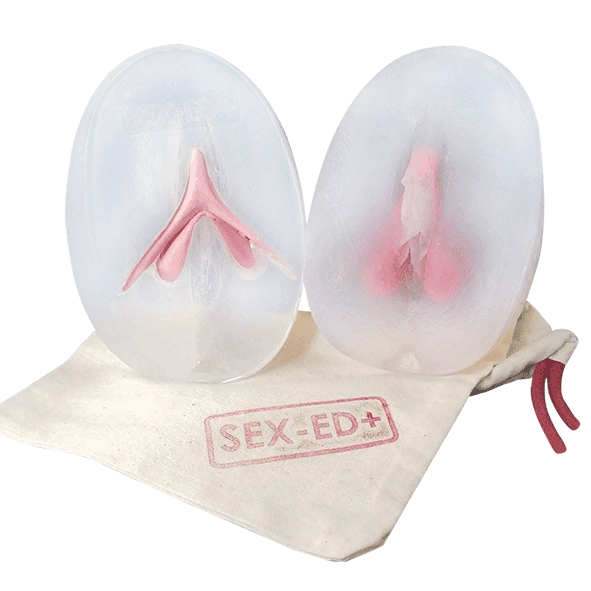
Handcrafted in Montreal using human casts, these models provide a realistic and engaging approach to anatomy education that extends far beyond traditional textbook illustrations, which tend to be binary and centred on reproductive functions.
By ensuring that people can see themselves represented in educational materials, Magaly is helping to create a more inclusive and realistic approach to anatomy education.
Why this matters for women’s health
Women’s health literacy begins with understanding our own bodies.
Yet many women reach adulthood unable to confidently identify parts of their anatomy or understand how they function. This knowledge gap can have real-world consequences, affecting everything from recognising symptoms and seeking help, to discussing concerns with healthcare professionals and making informed decisions about treatment.
Whether navigating periods, pregnancy, pelvic floor dysfunction, menopause, vulval conditions or sexual wellbeing, understanding anatomy provides a foundation for self-advocacy and informed healthcare.
For clinicians, educators, midwives, pelvic health physiotherapists, nurses and community health organisations, effective anatomy education can also improve communication and patient engagement. When people can visualise and understand what is being discussed, complex health conversations often become more accessible and meaningful.
This is why the work of Magaly Pirotte and SEX-ED+ is so important. By creating inclusive anatomical models that reflect the diversity of real bodies, Magaly is helping to bridge a gap that traditional health education has often overlooked.
Her work recognises that representation matters, and that education is about far more than anatomy.
It is about confidence.
It is about bodily autonomy.
It is about informed consent.
And it is about empowering people to better understand and care for their health.
More than anatomy
At its heart, this work is about much more than learning anatomical terms.
It is about helping people feel comfortable discussing their bodies, asking questions, understanding symptoms and making informed decisions about their health and pleasure.
Women’s health education should not begin when something goes wrong.
It should begin with understanding our anatomy.
Because knowledge is not simply information.
It is empowerment.
Learn more
Women’s Health Pathway is proud to highlight the work of Magaly Pirotte and SEX-ED+, whose innovative and inclusive educational resources are helping to improve health literacy and support a culture of bodily autonomy and informed consent.
If you would like to learn more about Magaly’s work and explore the educational resources available through SEX-ED+, visit the SEX-ED+ website.
Women’s Health Pathway is pleased to highlight organisations and advocates working to improve health literacy, bodily autonomy and access to evidence-based education.