

So, what is the clitoris?
The clitoris is a specialised organ made mostly of erectile tissue and nerve endings. Its only known function is to create pleasure. Research shows that the clitoris contains thousands of nerve endings—more than any other part of the human body—making it highly sensitive to touch, pressure, vibration, and temperature.12
What does it do?
The clitoris responds to sexual stimulation. When touched or aroused, it fills with blood, becoming engorged and more sensitive. This is sometimes described as the clitoris “ripening.” Stimulation—such as stroking, pressure, licking, vibration, or warmth—can create pleasurable sensations that may build toward orgasm.3
Orgasms are rhythmic, involuntary muscle pulsations that are felt in the pelvis, vagina, anus, and across the body. They are not just localised; they are whole-body experiences influenced by the nervous system. During orgasm, the body releases hormones such as oxytocin, which promotes feelings of relaxation, bonding, and wellbeing.4
Importantly, orgasms originate from the clitoral network. Even when pleasure is felt deeper inside the body, it is typically due to stimulation of the internal parts of the clitoris.
What does it look like?
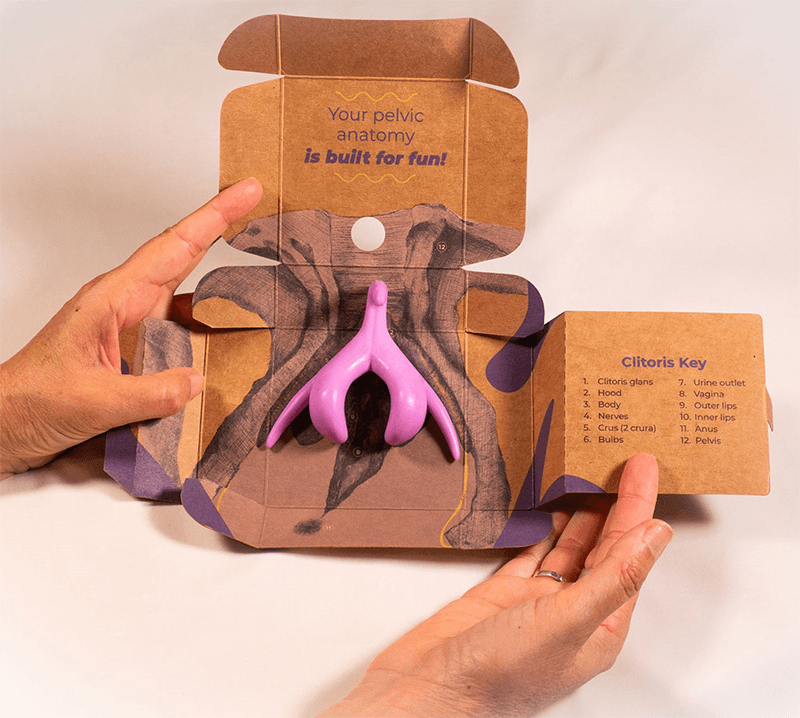
The clitoris is shaped like a wishbone and is an internal and external organ. Many people think the clitoris is just a small “button,” but that’s only the visible part, called the glans. The glans is at the top of the vulva, where the inner lips meet. It is highly sensitive and often covered by a fold of skin called the clitoral hood.
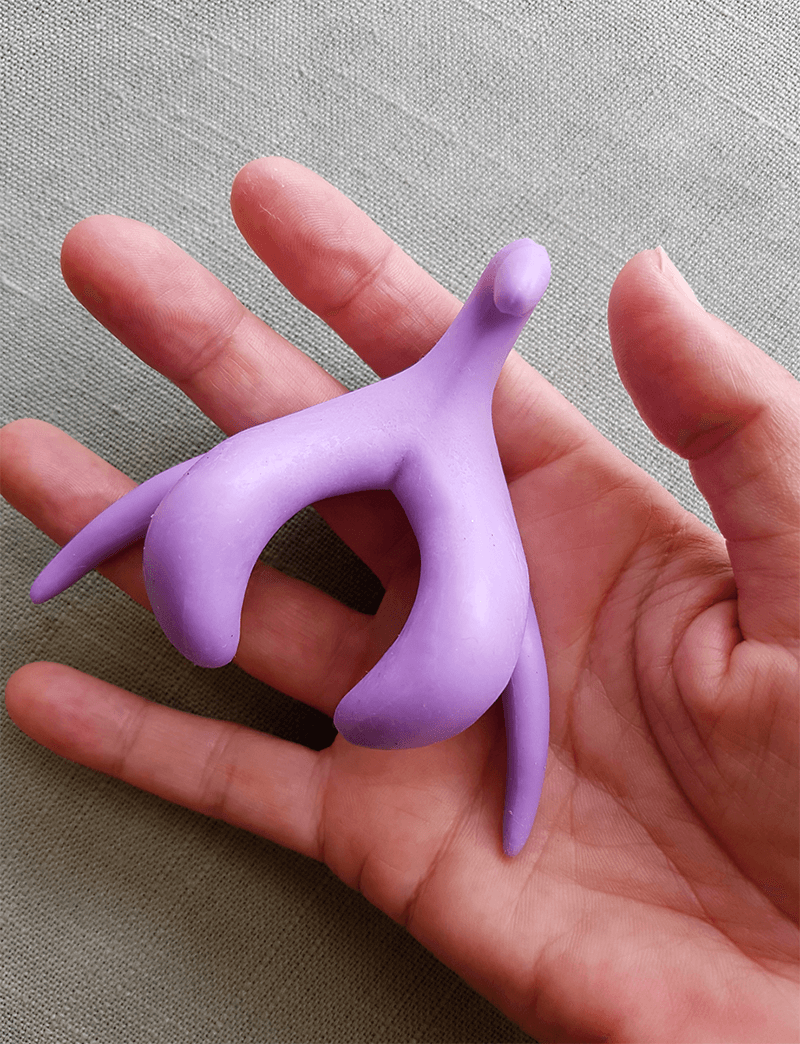
The shaft of the clitoris extends inward from the glans and is usually about 1 to 2 cm long on the outside. Internally the clitoris branches into a larger structure known as the clitoral complex. This includes two long “legs” (called the crura) which attach to the pubic bone and two bulbs. Altogether, the clitoral complex is on average 9 cm in size.1
Where is it?
The clitoris is found at the top of the vulva, above the urethral opening (where urine comes out) and the vaginal opening. While the glans is external, most of the clitoris is inside the body. The internal bulbs “hug” the vagina and urethra.
This means that stimulation of the vagina can also stimulate the internal clitoris, particularly the bulbs. This helps explain why some women experience pleasure (or orgasm) from vaginal touch, pressure or stretch, even though the vagina has fewer nerve endings compared to the clitoris.2 (The easiest way for women to orgasm is by stimulating the external clitoris and vulva lips.)
Why isn’t it mentioned in most sexual health information?
For a long time, the clitoris was ignored in medical research, education, and public discussion. Historically, books either censored it or described it inaccurately. Negative cultural attitudes toward sexuality—especially women’s pleasure—also played a role. Topics related to pleasure were considered taboo or unimportant compared to reproduction.
As a result, women and girls grew up without accurate information about their own bodies. Even today, some sexual health education focuses heavily on risk (like pregnancy and sexually transmitted infections) and leaves out pleasure and anatomy.15
However, this is changing. Recent research and education efforts are recognising the importance of the clitoris and providing evidence-based information about bodies and pleasure.
Understanding your body
The best way to understand your body is through curiosity and exploration. Learning what feels good to you—start by yourself. It is safe and does not cause harm. Everyone’s body is different, and there is no “right” way to experience sexual pleasure or orgasm.
Think about how you talk about your vulva, labia, and clitoris. Using clear, respectful language helps build confidence and makes it easier to communicate with others. You are the expert on your own body! Knowing what you like—and being able to express it—is an important part of sexual wellbeing.
Footnotes
-
O’Connell, H. E., Sanjeevan, K. V., & Hutson, J. M. (2005). Anatomy of the clitoris. Journal of Urology, 174(4), 1189–1195. ↩ ↩2 ↩3
-
Puppo, V. (2013). Anatomy and physiology of the clitoris, vestibular bulbs, and labia minora with clinical implications. Clinical Anatomy, 26(1), 134–152. ↩ ↩2
-
Levin, R. J. (2006). The physiology of sexual arousal in the human female: A recreational and procreational synthesis. Archives of Sexual Behavior, 35(2), 129–151. ↩
-
Komisaruk, B. R., Beyer-Flores, C., & Whipple, B. (2006). The Science of Orgasm. Johns Hopkins University Press. ↩
-
Wade, L. D., Kremer, E. C., & Brown, J. (2005). The incidental orgasm: The presence of clitoral knowledge in sexual health education. Sex Education, 5(1), 59–72. ↩